
A Crown Beneath the Ashes
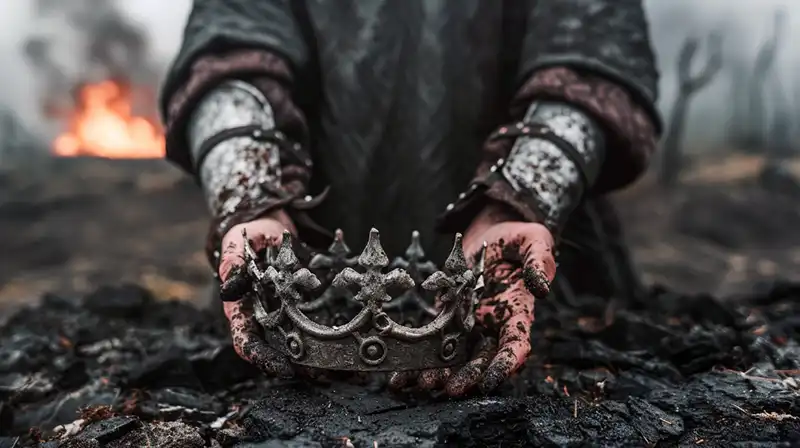
One Image, Three Story Ideas
Through the tones of Vestigial, Crucible, and Obscura, this image explores ruined sovereignty, transformative sacrifice, and the dangerous persistence of buried histories. One crown becomes three radically different narrative pathways hidden beneath the ashes of the same forgotten world.
Curiosity Spark:
Some kingdoms do not end when they fall; they linger in the soil like heat beneath burnt stone, waiting for someone desperate enough to lift their memory back into the light.
Three Story Starter Ideas:
Three distinct ways to look at one scene. Select a path below.
Vestigial — The Kingdom That Refused to Vanish
Long after the capital burned, travelers continue to disappear near the abandoned valley where the crown was buried beneath layers of soot and collapsed stone. The figure who uncovers it is not seeking power, but proof. Entire generations have been taught that the kingdom deserved its destruction — that its rulers poisoned rivers, trafficked in forbidden rites, and invited catastrophe through arrogance. Yet the closer the figure moves through the ruins, the less the official histories align with what remains.
Homes still contain half-finished meals turned to ash. Shrine walls bear messages pleading for mercy from an unnamed enemy. At the center of the destruction lies evidence of something far more deliberate than war: a civilization methodically erased.
The crown itself carries strange imperfections, as though pieces were violently removed from it before burial. When touched, fragments of forgotten voices surface — not commands or prophecies, but ordinary memories of people who expected to survive. The figure must decide whether revealing the truth would heal the world… or fracture it beyond repair.
Crucible — The Forging of the Last Sovereign
In a land where rulership is not inherited but forged, the crown is only raw material. Every generation, it is melted down and remade through a ritual that binds the next sovereign to the suffering of the realm. The fires required for the transformation burn so intensely that entire cities are sacrificed to sustain them.
The figure kneeling in the ashes was once chosen to participate in the ritual but fled before the final consecration. Years later, after civil collapse and famine, they return to recover the unfinished crown from the wasteland left behind. Without a sovereign, the land itself has begun to decay: rivers blacken, forests calcify, and even language starts losing meaning.
To complete the crown, the figure must surrender something essential — not a life, but a memory so foundational that its loss may erase who they once were. The ritual was never about power. It was always about determining what part of the self can survive sacrifice.
As the forge-fires begin to awaken beneath the ruined earth again, the figure must decide whether the world deserves to be remade at all.
Obscura — The Weight Hidden Inside the Metal
The crown was never ceremonial. It was a prison.
After the execution of an unnamed ruler centuries earlier, the kingdom discovered that death could not contain what had lived inside that sovereign’s mind. The consciousness persisted — moving through reflections, dreams, and eventually language itself. To contain it, royal craftsmen forged a crown designed not to symbolize authority, but to absorb thought.
Every ruler who wore it vanished slowly into silence.
The figure holding the crown is part of a clandestine order tasked with transporting it between ruins whenever signs of awakening appear. Entire villages have recently begun speaking in phrases no one remembers learning. Children draw maps of cities that no longer exist. Fires erupt without cause in places tied to the old monarchy.
Now the crown has begun whispering again.
Not promises. Not threats.
Recognition.
The figure realizes with growing horror that the object is not awakening because it seeks escape — it is awakening because it has finally found the person it was created to contain.
Story Nudge:
- What scent rises from the blackened earth when the crown is disturbed — wet ash, scorched cedar, old blood, something stranger?
- Why was the crown buried instead of stolen, displayed, or melted down after the fire?
- What faint sound can be heard beneath the wind — distant bells, whispers, the crackle of unseen flames?
- What personal history makes the figure hesitate before touching the metal, despite crossing a ruined battlefield to find it?
- What part of the kingdom’s destruction has been deliberately erased from memory, and who benefits from that silence?