
One image can hold many stories
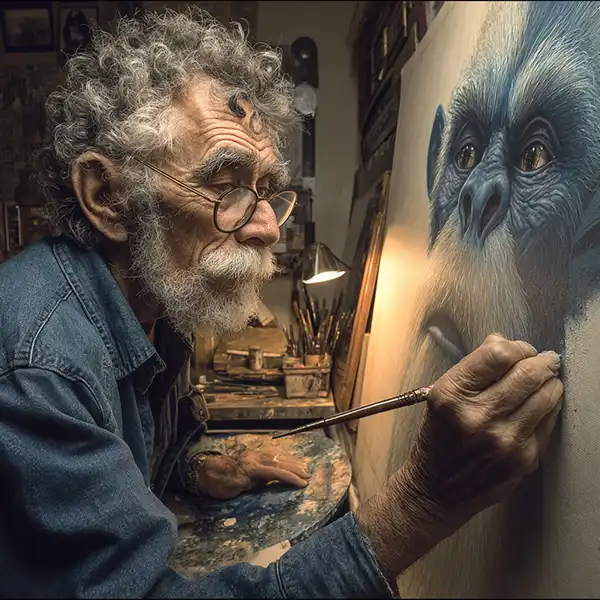
The Painter: One image, three story directions to explore
Train your eye and imagination to uncover the many narrative pathways one image can hold.
This image-centered story exploration uses the tonal perspectives of Crucible, Emergence, and Obscura to reveal multiple possible narrative directions. Use the curiosity spark and story nudges as a starting point for imaginative thinking and personal storytelling discovery.
Curiosity Spark:
If you were to trace the iridescent veins on its wings, would you see the maps of places you’ve dreamed of but have never visited, or the blueprints of a future you are only just beginning to build?
3 Story Ideas:
Crucible — Creation
The Last Technique
The painter works with deliberate patience, mixing pigments according to a method rarely practiced now, one that requires time measured not in hours but in attention. Each layer must settle before the next begins, each adjustment demanding restraint rather than correction. The process feels less like producing an image and more like entering into conversation with something that resists haste.
Yet the subject seems to require this exact discipline. Subtle variations in color reveal textures that feel almost remembered rather than observed. The painter begins to wonder whether mastery of craft is not simply about skill, but about becoming receptive to forms that cannot emerge through speed or convenience. What is being created here — a likeness, or a deeper capacity to perceive?
Obscura — Hidden Forces
What Watches Back
The eyes of the subject appear unusually patient, as though the act of observation is mutual. Each day the painter notices minor shifts in expression that cannot easily be explained by light or memory. The studio feels increasingly quiet, as though something within the room prefers not to be disturbed.
The more precisely the features are rendered, the more the painter senses that likeness alone cannot account for the growing unease. If an image reflects sustained attention, then what kind of attention might produce an expression that feels aware? The painter begins to question whether the subject is being studied — or whether the long discipline of looking has made the observer visible in return.
Emergence — Transformation
Becoming Through Attention
The work began as an exercise in technical refinement, a study meant to improve understanding of subtle tonal transitions. Yet over time, the painting becomes a quiet measure of personal change. Early brushstrokes appear uncertain compared to later ones, revealing how perception itself evolves through patience.
Something about the subject encourages stillness, inviting the painter to remain present long enough for distraction to dissolve. The image begins to reflect more than physical resemblance; it suggests a record of sustained effort, a visible trace of someone learning how to notice more fully. The painter wonders whether the final work will reveal the subject — or reveal the slow shaping of the one who observed it.
Story Nudge:
- What faint sound accompanies the careful movement of the brush — the whisper of bristles across canvas, the quiet shift of the chair, or distant ambient noise from outside the studio?
- What specific detail in the subject’s expression feels unusually intentional or difficult to capture?
- What scent lingers in the workspace from repeated layers of paint and time spent revisiting the same image?
- What earlier experience may have shaped the painter’s patience or need to understand this subject so precisely?
- What element might be missing from the scene that would explain why this image feels necessary to complete?